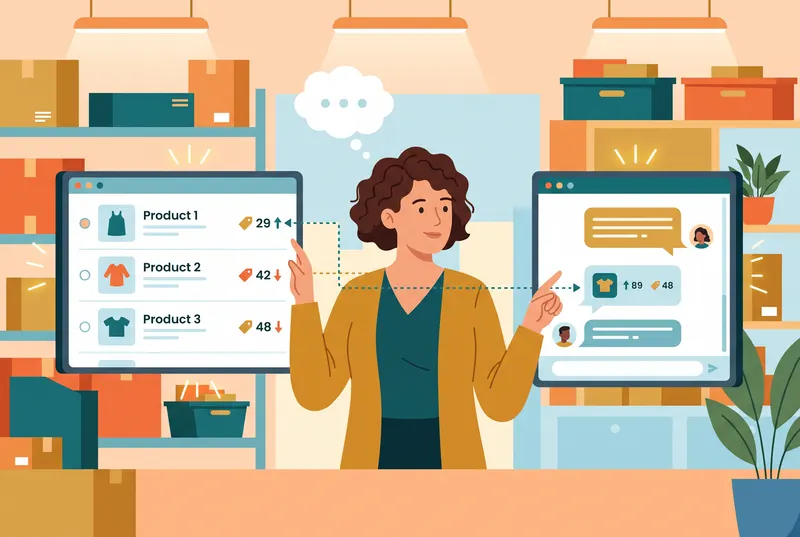
Use Chat Paths to Find the Missing Detail That Stops a Purchase
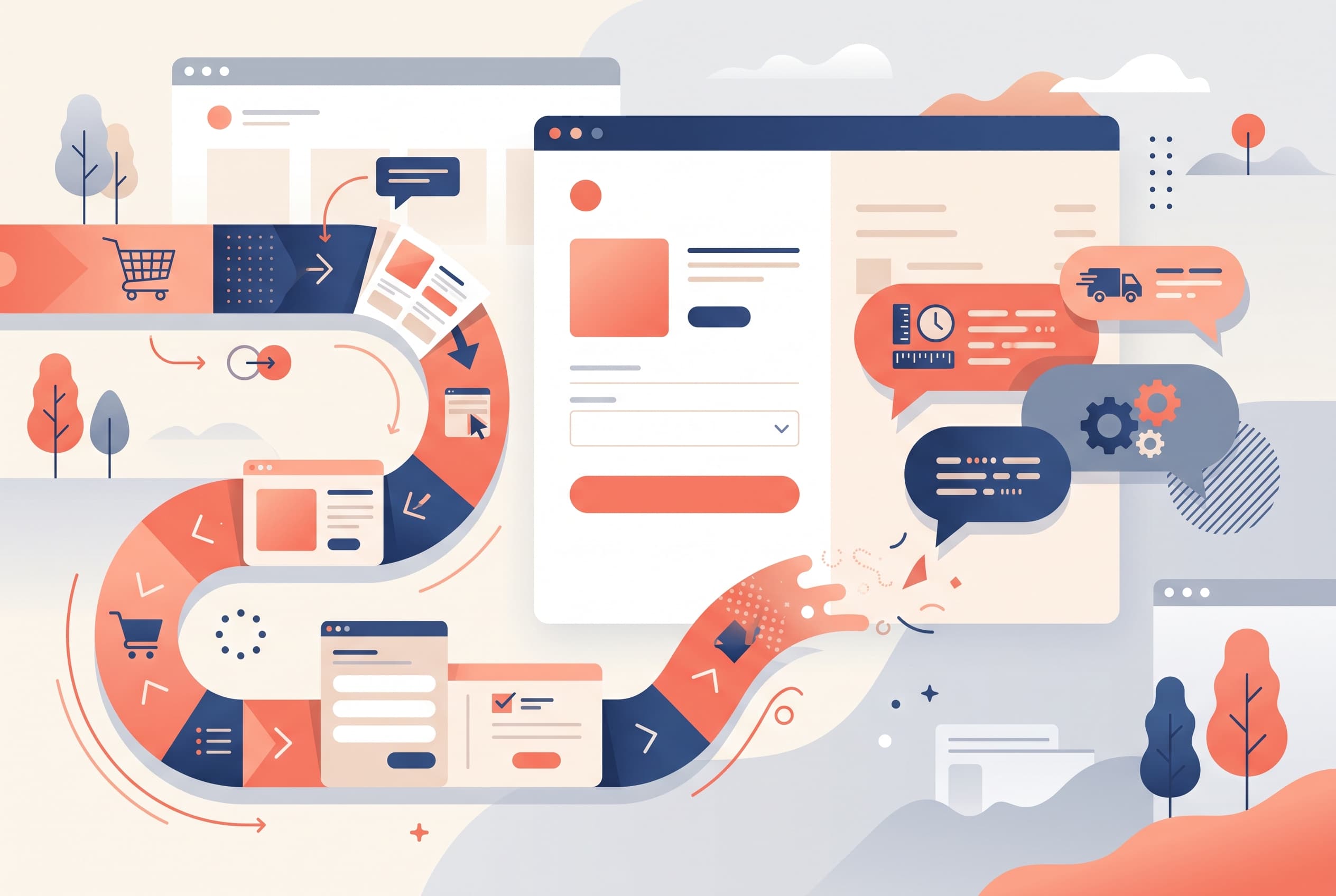
A visitor does not usually type, “I am abandoning this purchase because your product page omitted a detail.”
They ask something smaller.
“Will this fit a 14-inch laptop?”
“Does the price include the mounting bracket?”
“Can it arrive before Friday?”
Then the chat goes quiet. The visitor may still browse for another minute. They may even reach the cart. But the buying decision has lost momentum.
This is why website chat is more useful than a list of frequently asked questions. It records the moment when a person moves from general interest to a decision that needs evidence. If the same question keeps appearing at that moment, the issue is rarely the chat answer itself. The issue is that the information is absent, buried, vague, or placed too late on the page.
Treat conversations as decision paths, not isolated questions
A useful conversation review starts with the visitor’s sequence of intent, rather than the support category assigned to the chat.
For example, a product conversation may follow this pattern:
- The visitor opens chat from a product page.
- They ask whether the item works with a specific setup.
- They ask about delivery or returns.
- They stop responding after receiving an answer.
At first glance, this looks like two unrelated questions: compatibility and shipping. In practice, it can reveal a single decision: “Can I use this without creating a problem I will have to undo next week?”
The missing information may be a compatibility table near the purchase button, a clearer delivery cutoff, or a short explanation of what is included in the box. The chat transcript gives you the language visitors use; the page tells you where that language is missing.
Do not start by reading every conversation. Start with a narrow slice:
- Chats opened on high-intent pages, such as product, pricing, booking, or checkout-adjacent pages.
- Conversations where the visitor asked one or two questions and then stopped.
- Repeated question wording, especially when different visitors use nearly the same phrase.
- Chats that begin after a visitor has scrolled far down a page, since they have likely already looked for the answer.
The goal is not to diagnose every abandonment. It is to find the repeated hesitation that is cheap to remove.
Look for the question behind the question
The literal question is often only the surface version of the buyer’s concern.
A visitor asking “Is it easy to install?” may actually be asking:
- Do I need tools I do not own?
- Is this compatible with my current setup?
- Will I need to hire someone?
- What happens if it does not work?
If the team replies with “Yes, it is easy,” the visitor gets a reassuring sentence but not much evidence. The next page improvement should answer the operational version of the question.
That might mean adding:
- A list of included parts and required tools.
- A compatibility checklist with specific models, dimensions, or environments.
- A photo or short written description of the finished setup.
- A delivery and returns explanation beside the purchase action, not only in the footer.
This is where chat reveals a common page-writing mistake: businesses describe the product, but visitors need help imagining the consequences of choosing it.
Mark the step where confidence falls away
Not every unanswered-looking chat is a content gap. Some visitors leave because they are comparing suppliers, got distracted, or were never serious buyers. You are looking for a pattern that appears at a consistent step.
Create a simple review sheet with five columns:
| Page or offer | Last meaningful visitor question | What they needed to decide | Where the answer currently lives | Page change to test |
|---|---|---|---|---|
| Product page | “Will this work with X?” | Compatibility confidence | Deep in technical documentation | Add a visible compatibility block |
| Pricing page | “Is setup included?” | Total cost confidence | Mentioned in a separate FAQ | Clarify what each option includes |
| Delivery page | “Can it get here this week?” | Timing confidence | General policy page | Add cutoff and destination guidance |
The fourth column matters. A detail that technically exists can still be missing from the buying path.
If the answer is three clicks away, hidden in a long PDF, or written in language customers do not use, visitors will still ask chat. When they must ask, they are telling you where the page failed to carry the decision forward.
Use flows to separate curiosity from a blocked decision
A short chat flow can make the weak step easier to spot. Put a few quick-start choices in the widget that match real decision stages, such as:
- Check compatibility
- Understand delivery options
- Compare plans
- Ask about returns
The value is not forcing people through a script. It is seeing where they choose to begin, what they click next, and whether they submit a lead form or complete the flow. A path with plenty of views and clicks but few completions deserves a closer look at the question or offer placed there.
Be careful with interpretation. A low completion rate can mean the flow is poorly worded, the visitor found the answer elsewhere, or the request simply needs a human. It does not automatically mean the product is weak.
With Owni, per-flow reporting separates views, clicks, submits, and completions, while the shared inbox keeps the full conversation history searchable. That makes it possible to compare a funnel drop with the actual wording visitors used before they left. The useful unit of analysis is the pair: a measurable step in the flow and the transcript around it.
Turn repeated chat answers into page-level evidence
Once you identify a repeated gap, resist the urge to add a giant FAQ section. Put the answer where the decision occurs.
If visitors ask about dimensions after viewing product photos, place dimensions beside those photos. If they ask about cancellation after viewing a price, explain the relevant terms near the price. If they ask whether a service is suitable for a particular team size, put a practical fit guide before the call-to-action.
Then update the chat knowledge source as well. An AI assistant that answers from your own imported pages, FAQ entries, pasted text, or uploaded files can point visitors back to the exact source page. Before relying on one, use this practical evaluation plan for an AI shopping assistant to test product answers, recommendations, stock questions, and installation details. It can also say it does not know when the information is not in the knowledge base, which is a useful warning that the team has not documented a decision-critical answer yet. Quality still depends on keeping those sources accurate after a page change.
Avoid turning every one-off question into permanent page copy. A good threshold is repetition plus proximity to purchase intent. If several visitors ask the same thing on the same type of page, and the question appears just before they disappear, test a visible answer.
Make one change before collecting another pile of transcripts
A common failure mode is building a perfect backlog of chat insights and changing nothing. Pick the gap with the clearest pattern, add the missing detail near the relevant decision point, and watch the next set of conversations.
You are not trying to eliminate questions. Questions about edge cases, unusual orders, and personal circumstances should still reach a person when needed. The immediate test is narrower: after the page change, do visitors stop needing chat for that basic uncertainty and move on to more specific questions?
If the same question still appears, the issue may be placement, wording, or trust rather than missing facts. Move the answer closer to the action, replace internal terminology with the visitor’s wording, and make the evidence more concrete. Start with the question that appears just before the silence.
FAQ
It is the sequence of a visitor’s page context, questions, clicks, and stopping point. Reviewing that sequence helps distinguish a general enquiry from a decision that stalled because a practical detail was missing.
There is no universal number. Prioritize questions that recur on high-intent pages, use similar wording, and appear near the point where visitors stop replying or fail to complete a flow.
No. One-off edge cases are usually better handled in chat. Add information to a page when it repeatedly blocks a common buying decision and can be explained clearly at that point in the journey.
No. Views, clicks, submits, and completions show where a flow loses people, but the conversation history provides the context for why. Use both before changing a page.