Owni.chat vs JivoChat: Compare the Support Workflow, Not the Feature Checklist
Most chat-software comparisons start with a grid of ticks: chatbot, inbox, analytics, integrations, branding. That grid is usually where the useful part ends.
A support lead does not feel a “shared inbox” in the abstract. They feel it when a visitor asks about a refund exception, the automated reply is uncertain, and a teammate needs the full context without asking the visitor to repeat themselves.
So, when comparing Owni.chat vs JivoChat, build the decision around the conversations your site actually receives. Ask each vendor to show the workflow with your content, your pages, and the awkward questions that arrive after hours. Current product pages and plan documentation should settle any JivoChat-specific capability or pricing questions; the more valuable exercise is seeing where the work lands when the conversation stops being simple.
Start with the source of an AI answer
The first question is not “Does it have AI?” It is: what is the answer allowed to rely on?
For a business with a narrow catalogue, policy-heavy service, or frequently misunderstood delivery rules, generic-looking answers are a risk. A useful test set includes questions such as:
- “Can I return a personalised item after it has been opened?”
- “Which plan includes access for a second location?”
- “Is this product compatible with the older model?”
- “What happens if the parcel is delayed after dispatch?”
Ask the provider to answer from the material you give it, then ask where each answer came from. A chat assistant that cannot point support staff back to a source creates a second job: checking whether its response was right.
Owni.chat indexes pasted text, FAQ entries, imported URLs, and uploaded PDF, Markdown, CSV, or TXT files with vector embeddings. Its answers link to the exact source page, and it uses an honest fallback when the knowledge base does not contain the answer. That is a practical fit for teams that would rather see “I don’t know” than spend Monday correcting a confident mistake. The trade-off is straightforward: the answer quality is limited by the clarity and completeness of the pages and files you import.
During a demo, do not accept a polished happy-path question. Add one outdated FAQ, one exception buried in a PDF, and one question the documentation genuinely does not answer. You are testing not only retrieval, but restraint.
Separate instant help from human ownership
“Human handoff” sounds obvious until you define what it means on a busy afternoon.
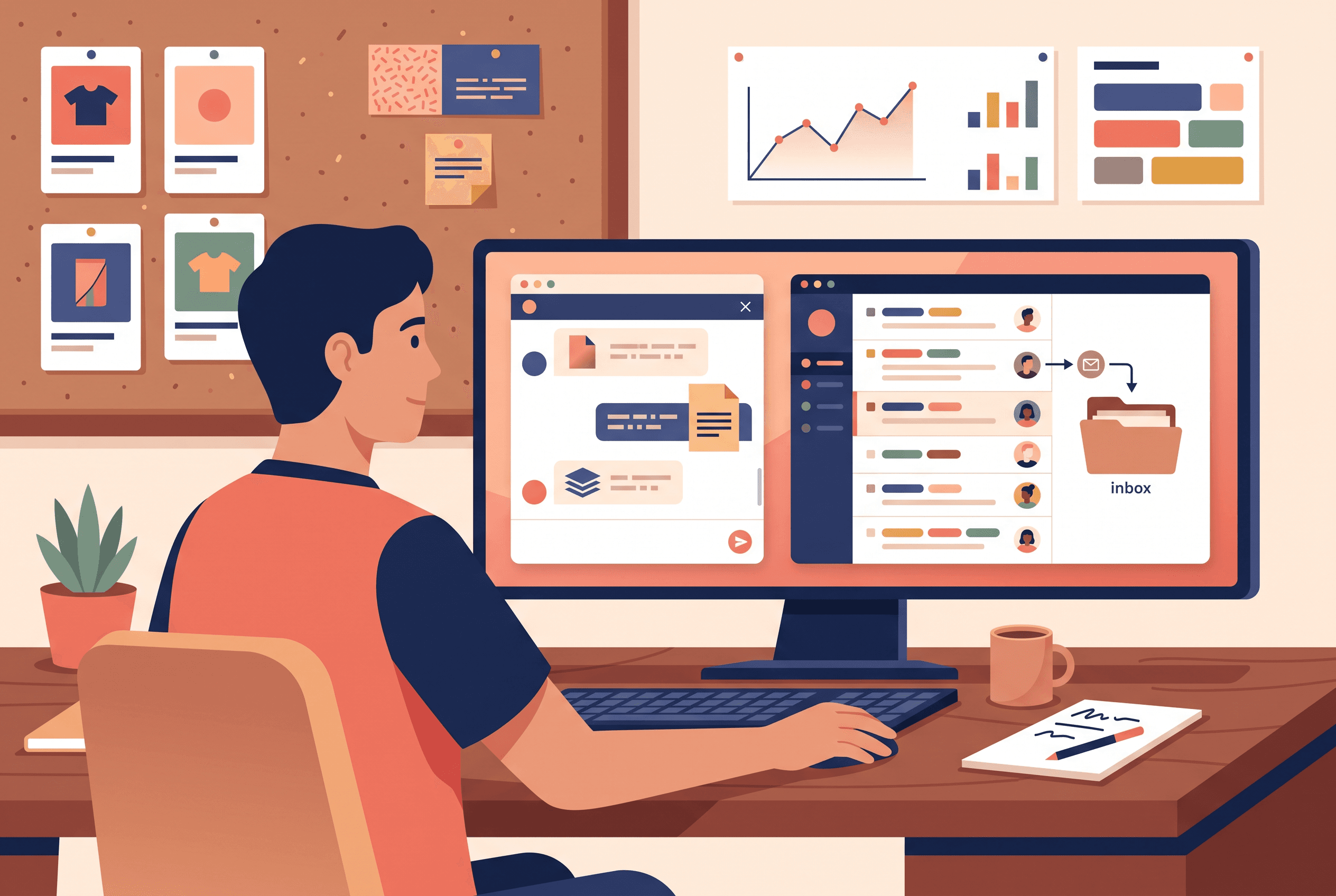
A visitor may need a person because their question is sensitive, their problem has several moving parts, or they have already tried the automated path twice. In those moments, the important comparison is whether the handoff preserves the conversation and gives the team a usable working queue.
Map the route you need:
- A visitor opens chat or arrives from a specific product or pricing page.
- They receive an answer or choose a guided option.
- The difficult case goes to a human.
- A teammate can see history, assign ownership, change status, and search the conversation later.
The useful operating detail is ownership. Can someone tell which chats are open, pending, or closed? Can a manager find the earlier conversation when a customer returns a week later? Is there an audit log when several people work the same queue?
A website chat system should also be evaluated for the quiet hours. If no one is staffed at 22:00, decide whether the widget should offer an offline message, collect a lead, allow the assistant to answer from approved content, or do some combination of those. A tool can support an impressive live interaction and still leave an unstaffed site with no clear next step.
For this comparison, write down your escalation rules before the call: refund disputes, sales qualification, technical errors, order questions, and account access. Then verify how each rule is configured rather than assuming the word “handoff” covers all of them.
Compare installation with the site team’s real constraints
Chat widgets often become a small engineering negotiation. Marketing wants one on every landing page. Developers want no visual jump, no new layout problems, and no mystery script that blocks rendering.
The practical install question is simple: who can put it live, and what happens after the first install?
One async script tag placed before the closing body tag is easier to review than a project requiring template surgery. It also matters whether a design change requires another release. If your campaign team changes a promotion every week, waiting for a deployment to alter welcome text or quick questions is friction that will show up quickly.
For sites with several environments, ask about domain controls. A sensible test includes production, staging, a subdomain, and any regional site that needs the same project. Also test the mobile widget independently. A chat bubble that is unobtrusive on a large monitor can cover the checkout controls on a phone.
The documented setup here uses one asynchronous script that loads after page rendering, has no iframe layout shift, and is intended not to affect Core Web Vitals. Installation takes about two minutes, with an install checker confirming the widget is live. A project can allow up to 10 registered domains. That does not replace your own performance checks; run them on the pages where speed and conversion matter most.
Treat lead capture as a measured path, not a popup
Many teams add chat because they want more leads, then discover that chats are happening without a reliable way to classify or route the useful ones.
A better setup makes the lead path explicit. For example, a visitor on a service page opens chat, picks “Get a project estimate,” answers two qualifying questions, and enters their name, email, and phone number. The team should be able to distinguish that completed lead from a casual support chat.
When comparing products, ask to see these numbers per path:
- Flow views
- Button clicks
- Form submissions
- Completed flows
Those are more revealing than a single total-chat number. If many people open the widget but few submit, the issue may be timing, page intent, or an overly demanding form—not a lack of traffic.
The workflow should also end somewhere useful. If your team uses Zapier, Make, or a custom backend, verify how captured details leave chat and whether the webhook is authenticated. Do not assume a website chat tool connects to a particular CRM or helpdesk unless the vendor documents that connection.
Check where product questions become purchase questions
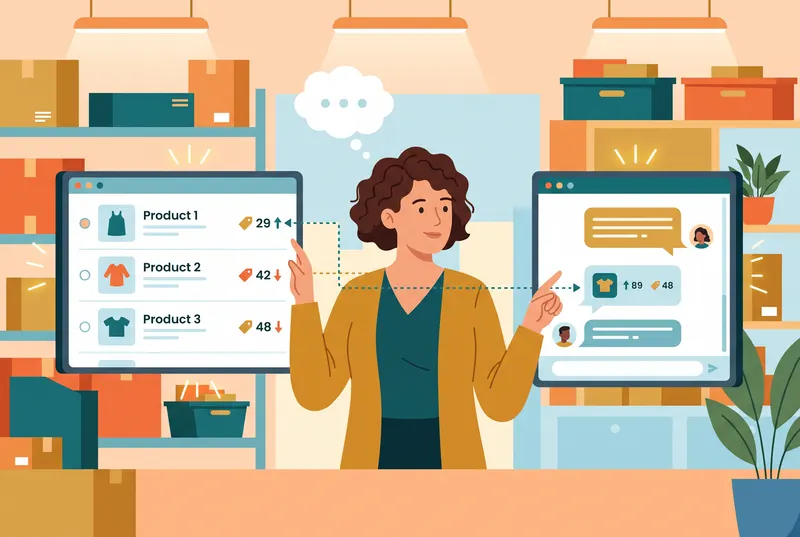
For ecommerce teams, there is a meaningful difference between answering “Which one should I buy?” and actually showing a customer the relevant item.
If recommendations matter, test a live catalogue scenario. Ask about a product category, inspect the card shown in chat, and verify the image, price, and add-to-cart action on the site itself. Then ask how the catalogue gets there and when changes are pushed.
The documented option in this comparison supports product cards with an image, price, and an add-to-cart button that fires the site’s own JavaScript. It requires a connected catalogue. On OpenCart 3 or 4, the marketplace module pushes the catalogue on every product save; teams using another platform can use the REST API or available SDK packages for catalogue sync. A plain script installation without a catalogue feed will not produce product cards.
That distinction prevents a common procurement mistake: buying for “product recommendations” before anyone has agreed who owns product data maintenance.
Put plan limits beside your busiest month
Pricing pages are easy to compare when traffic is low. They become more important when a campaign works.
Before choosing either product, pull one recent busy month and estimate:
- Number of conversations, including low-value questions
- Number of staff who need inbox access
- Number of sites and domains
- AI messages likely to be used after launch
- Number of separate lead or support flows
- How long the team needs searchable history
Then run a realistic launch month through those limits. A team supporting several brands may care more about separate projects in one workspace than about the headline monthly price. A lean team may care more about whether one flow and one seat are enough to prove the channel.
Do that spreadsheet before the sales call. The result will tell you whether you are comparing chat tools—or comparing two very different ways of running website support.
FAQ
Use real questions from support: a simple FAQ, an exception hidden in a policy document, a question with no documented answer, and a case that needs a human. Check the answer source, the fallback behaviour, the transcript, and how a teammate takes ownership.
Yes. Flows can include lead-capture forms for names, emails, and phone numbers. Per-flow analytics can show views, clicks, submissions, and completions, and captured leads can be sent through HMAC-signed webhooks to Zapier, Make, or a custom backend.
No. The documented installation is one asynchronous script tag before the closing body tag. It loads after page rendering, and an install checker confirms that the widget is live.
Yes, when a product catalogue is connected. The assistant can show product cards with an image, price, and an add-to-cart button that triggers the site’s own JavaScript. Without a catalogue feed, product cards will not appear.